

MEDICAL / ROSS SURGICAL ROBOT
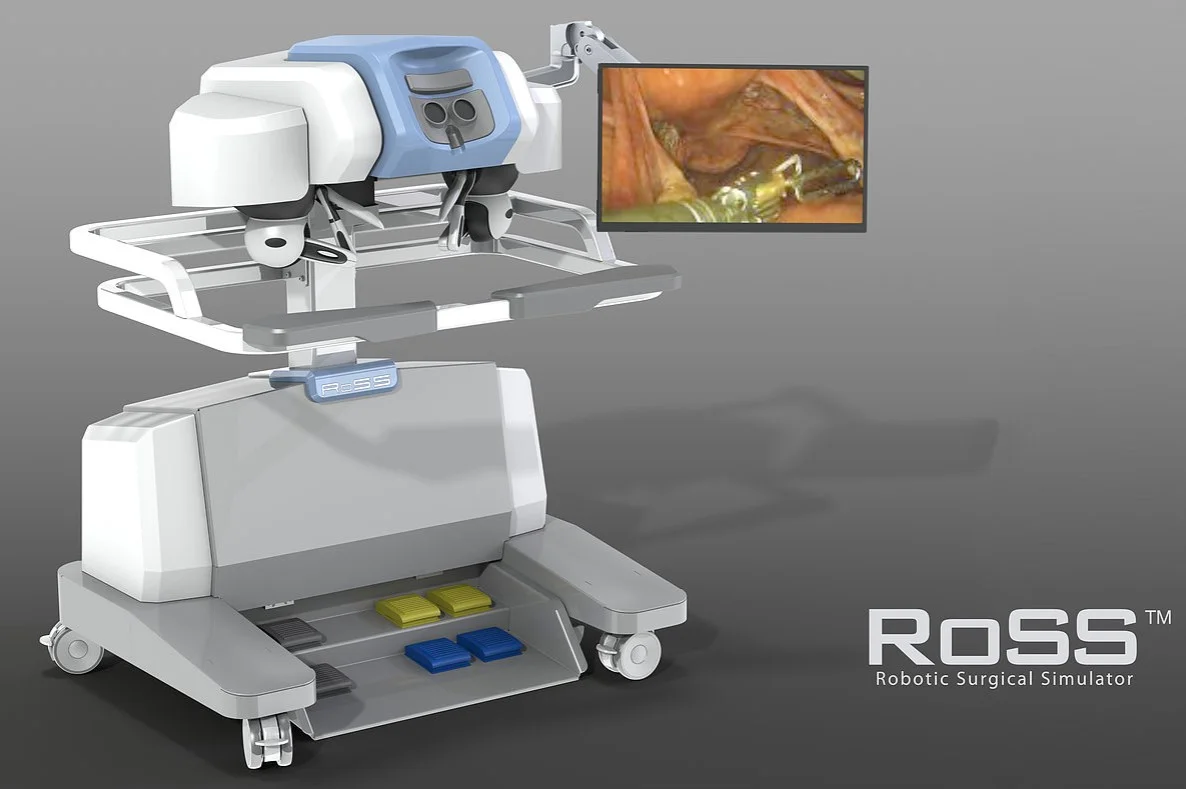
Enclosures for a robotic surgical simulator.
APPLICATION
Robotic surgical training simulator
CONFIRMED SCOPE
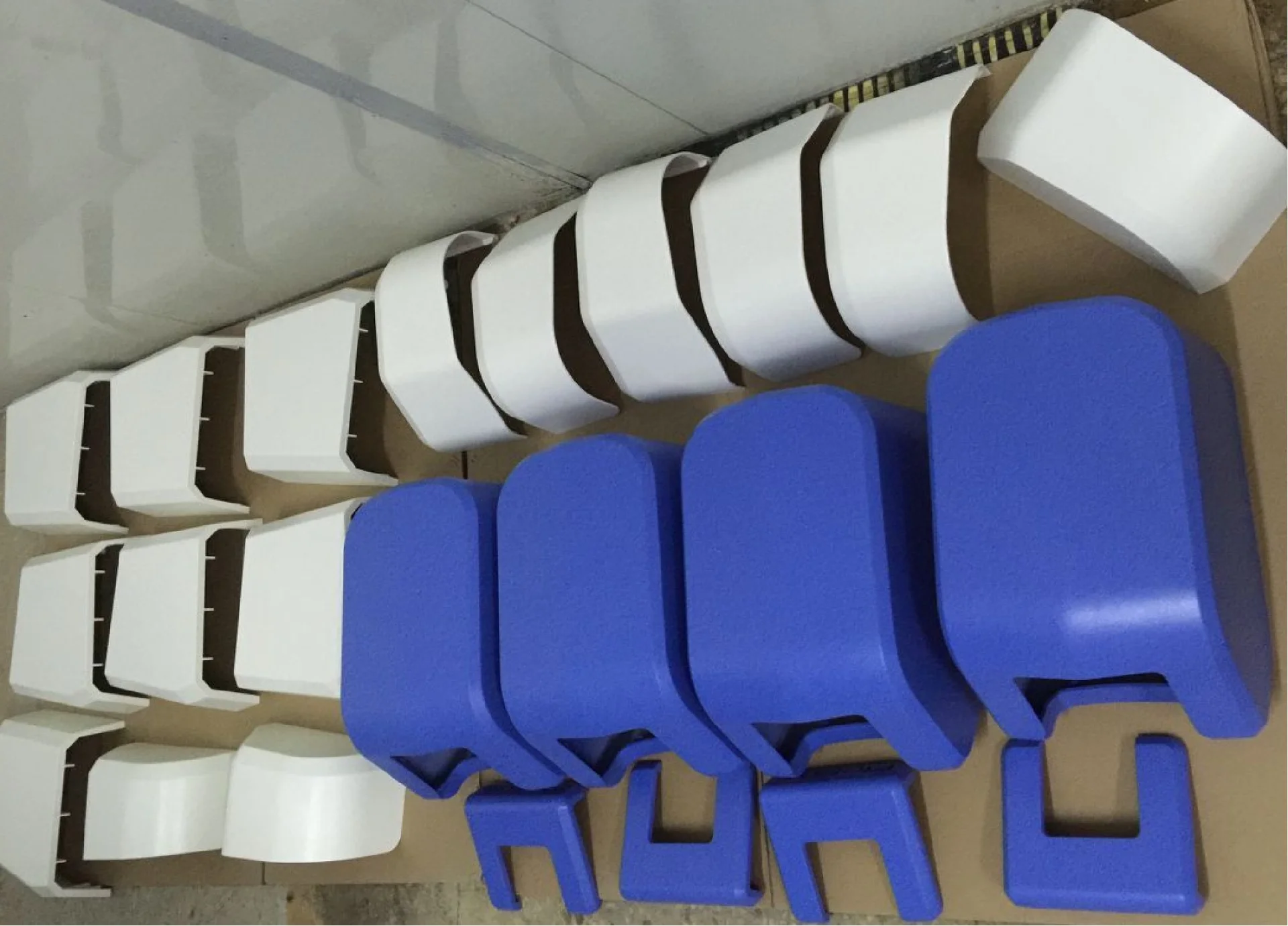
CNC machining of a medical enclosure series
CUSTOMER
Canada
MATERIAL
ABS
PROCESS
Silicone molding
SURFACE FINISH
Polishing
TOLERANCE
±3%

Silicone-mold replication of a medical enclosure series.
01 / DFM REVIEW
Review the design before replication.
Review the enclosure drawings for silicone-mold vacuum casting, a polished appearance and the customer-specified tolerance of ±3%.
01 / Receive & Align
Check 2D and 3D revisions, assembly references, quantities and acceptance requirements. Resolve missing inputs and identify critical features.
02 / Assess Requirements & Define Actions
| Review area | DFM assessment | Review output |
|---|---|---|
| Material / ABS | Confirm the casting resin grade and its match to the specified ABS properties, appearance and service conditions. | Approved resin grade and material data. |
| Master & silicone mold | Review master accuracy, surface quality, parting lines, undercuts and mold opening around the cover. | Master approval and mold-split plan. |
| Walls, gates & vents | Review wall transitions, fill paths, gate and vent positions; assess air traps and demolding risks. | Casting layout and geometry actions. |
| Tolerance / ±3% | Agree which nominal dimensions the percentage applies to; assess shrinkage, distortion and mating clearances. | Tolerance basis and inspection plan. |
| Finish / Polishing | Define gloss and visual acceptance; review seam cleanup, polishing access and material removal at edges. | Approved finish sample and polishing plan. |
| Samples & consistency | Check cover fit, openings and appearance; verify agreed dimensions and monitor silicone-mold wear. | Sample sign-off and batch checks. |
03 / Feedback, Customer Confirmation & Release
Return marked-up drawings, proposed changes and an action log. Resolve open items with the customer, confirm the drawing revision and inspection plan, then release the agreed package for sampling.
Review basis: ABS, silicone-mold replication, polishing and ±3% are customer-specified. Confirm the casting resin grade and tolerance basis before release; no clinical compliance claim is made. DFM topics describe the review process, not completed project findings.
02 / COMPONENT DETAILS
A coordinated enclosure family.
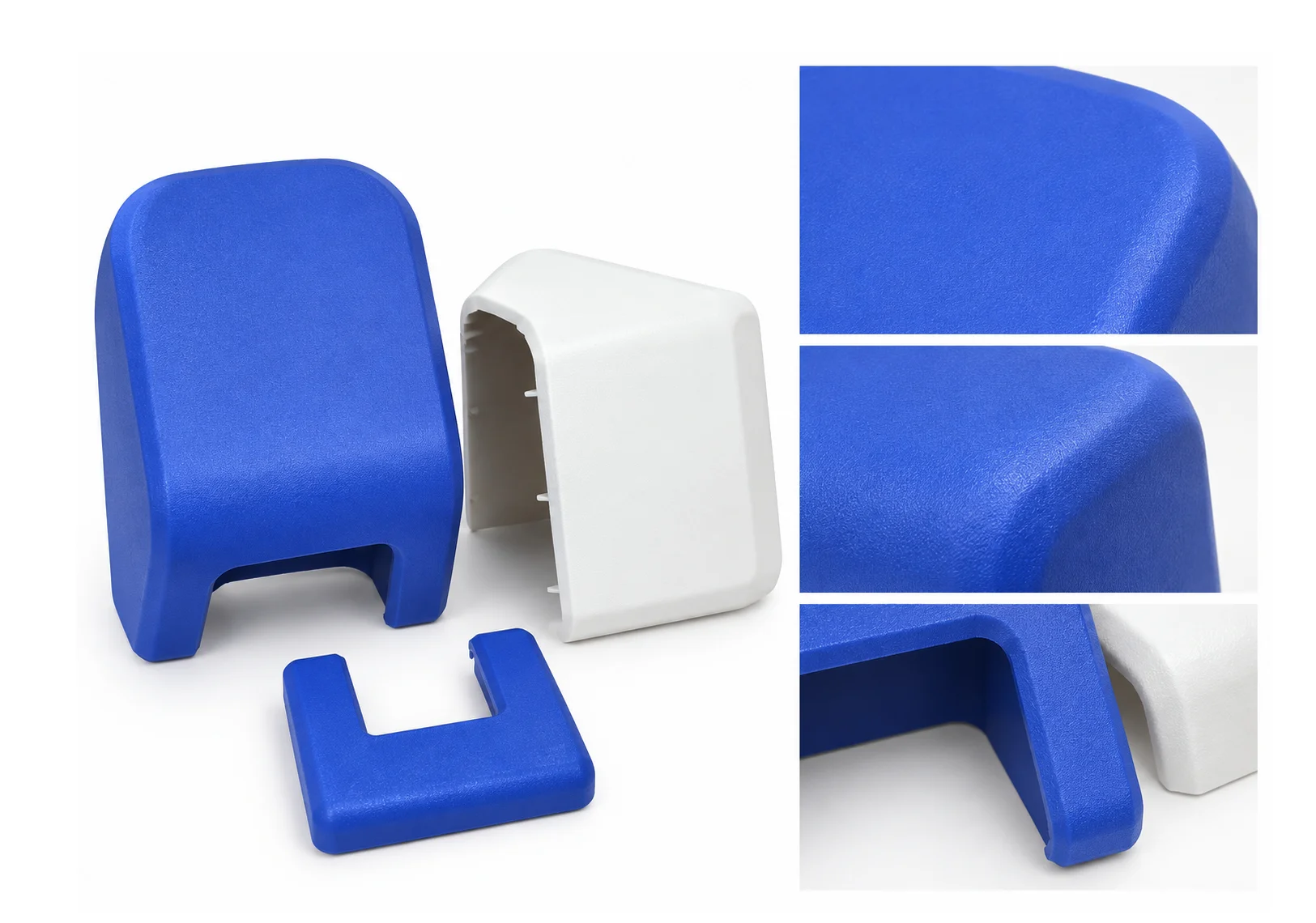
The components in focus
Curved surfaces, edge transitions and interfaces between neighboring parts deserve attention during manufacturing planning. They provide a practical starting point for discussion between a design team and its manufacturing partner.
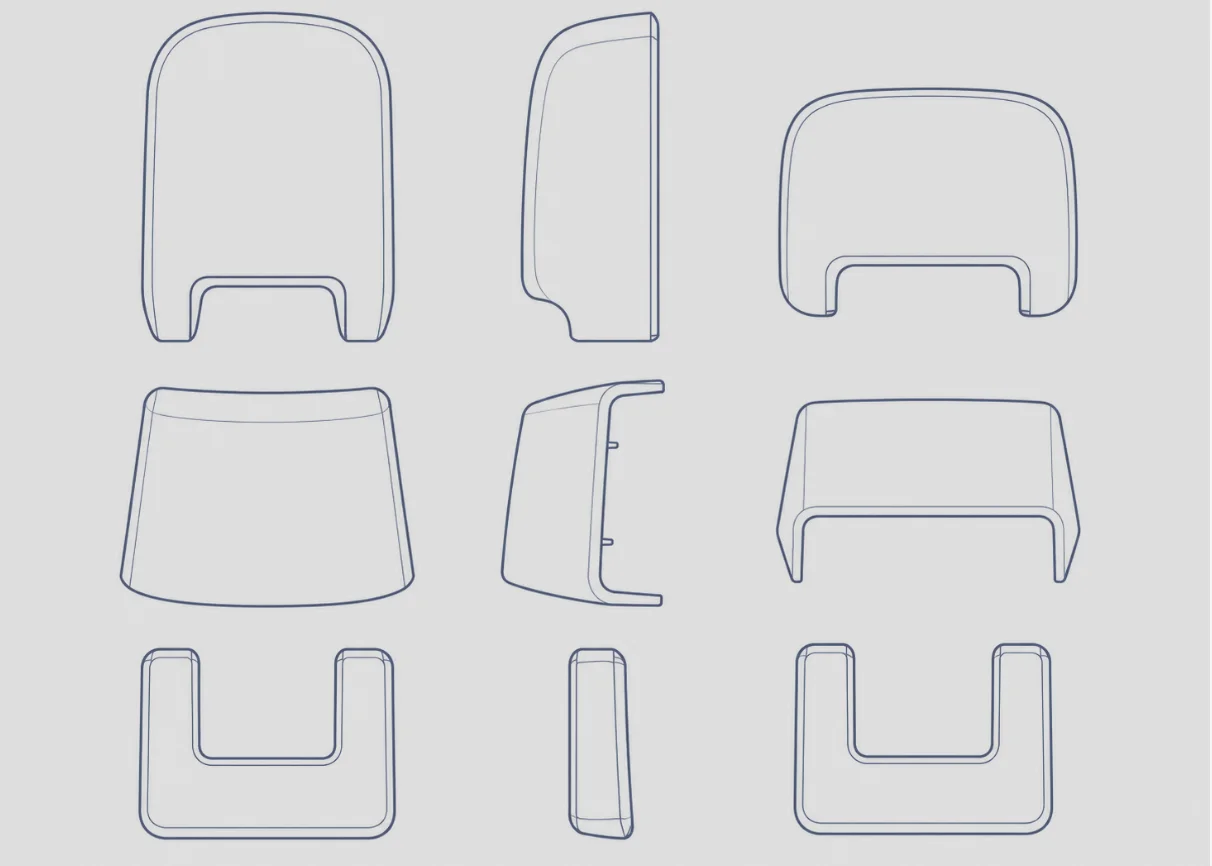
ENCLOSURE DESIGN / PUBLIC PRESENTATION VIEWS
From enclosure form to visual concept.
Dimension-free drawings and a shaded 3D view for public case presentation.
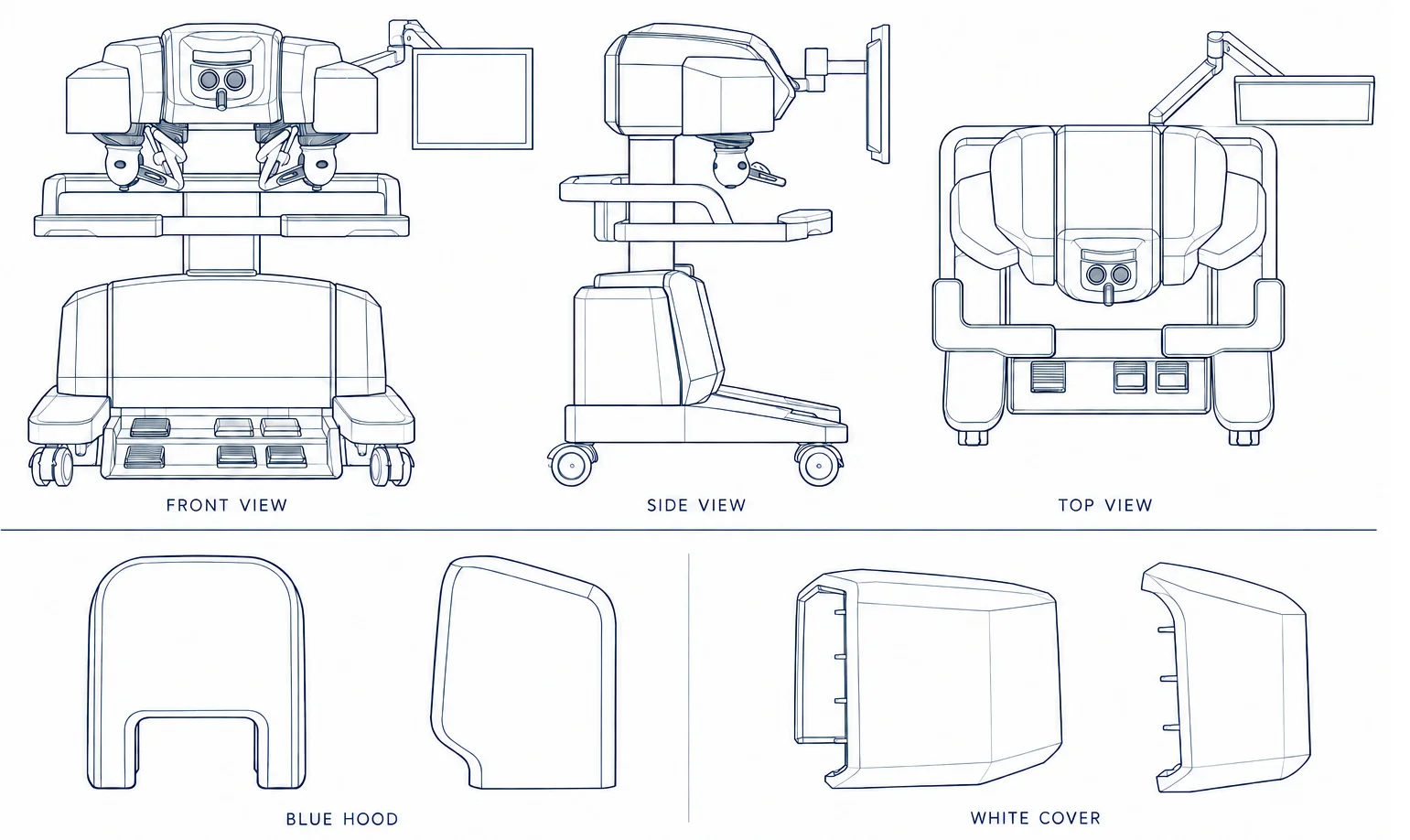
CONFIDENTIALITY-SAFE / SIMPLIFIED / NOT TO SCALE
Based on the visible enclosure family. Internal features and proportions are simplified; all dimensional annotations and customer identifiers are omitted. These views are not production CAD.
SILICONE-MOLD REPLICATION / DESIGN TO DELIVERY
Replicate the form. Refine the finish.
An agreed drawing package, approved master and controlled finishing steps support a consistent enclosure family.
01 / Design & DFM
Confirm resin selection, enclosure interfaces, ±3% tolerance basis and the finish sample.
02 / Master preparation
Create and finish the master, review its surface and confirm the mold parting strategy.
03 / Silicone mold making
Form and cure the silicone mold, open the parting line and prepare gates and vents.
04 / Vacuum casting
Prepare and degas the selected resin, fill the mold and follow the approved curing cycle.
05 / Demold & polish
Remove castings, trim gates and seams, and polish without rounding critical interfaces.
06 / Inspect & deliver
Check fit, agreed dimensions and appearance; protect finished surfaces for shipment.
Agree the sample before batch production.
Review the master, first castings and polished sample with the customer. Record accepted appearance and fit, then retain reference samples for batch comparison. The route reflects the updated customer requirements. Final resin, tooling and acceptance details are established during engineering review.
MEDICAL / SIMULATOR ENCLOSURES
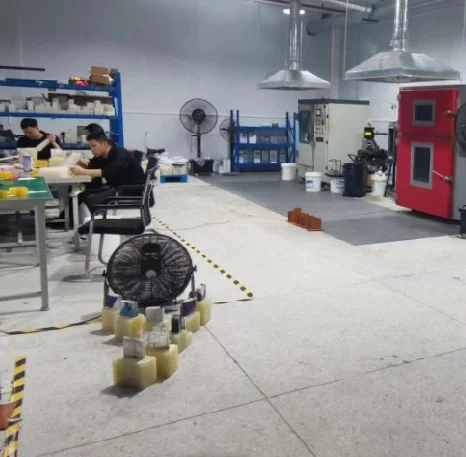
Silicone molds on the workshop.
Real workshop photograph showing mold-handling benches and vacuum-casting equipment.
Mold handling
Benches provide space for silicone-mold preparation, opening and handling.
Vacuum equipment
Casting equipment and associated curing facilities support the selected resin process.
Process review
Confirm mold preparation, resin handling, curing and sample inspection for the project.
From the approved mold to a finished cover.
The project route is silicone-mold replication followed by polishing. Review mold release, bubbles, distortion and surface cleanup before accepting the finished enclosure.
Project checkpoints: selected ABS-performance resin, approved casting procedure, polished appearance and dimensional checks against the agreed ±3% requirement.
Send us your CAD file / design to start your project.