VACUUM CASTING SERVICE
No steel mold — from 20 units, at a fraction of injection-molding cost.
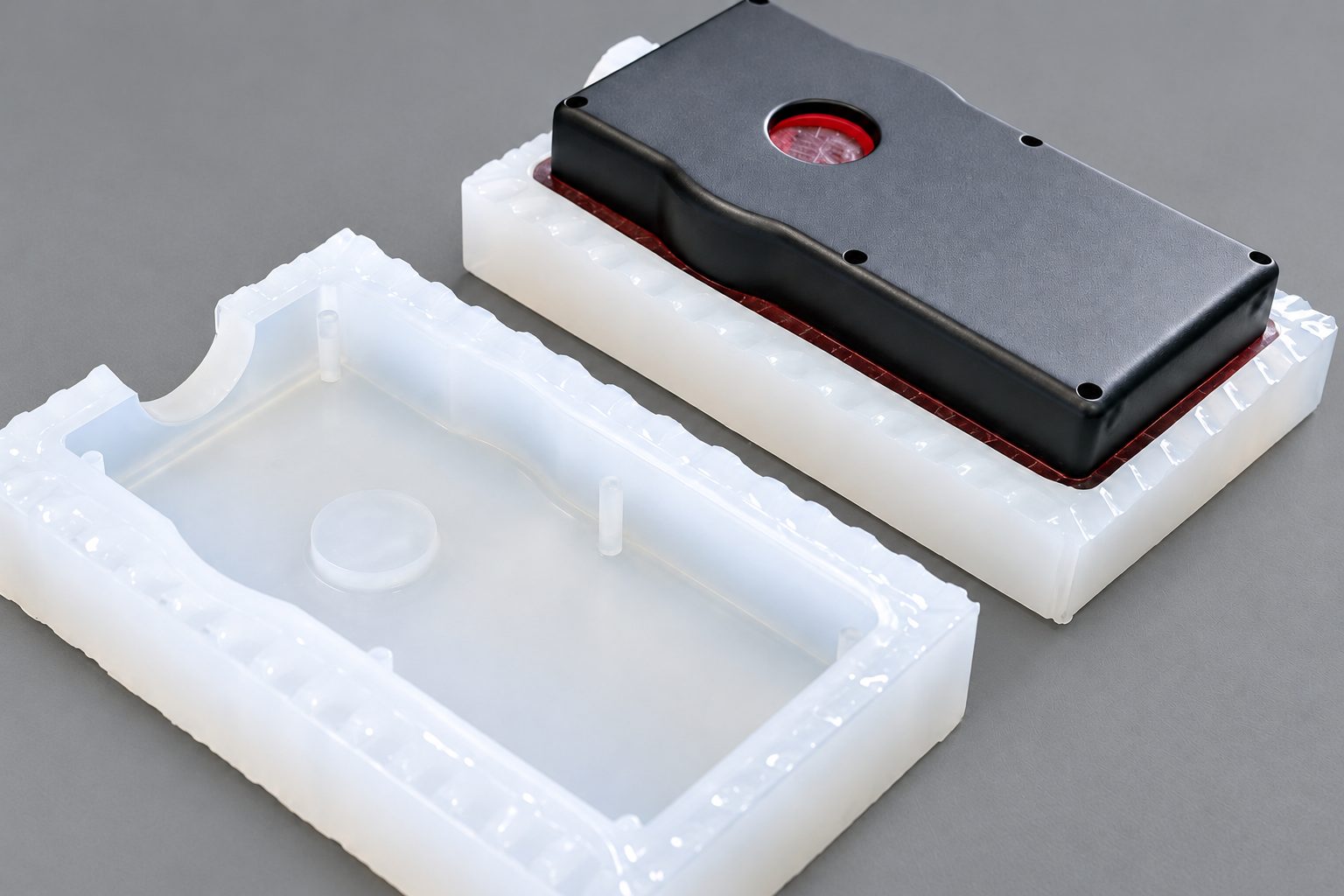
A 3D-printed or CNC master is used to cast a silicone mold, then PU resin is cast under vacuum to replicate parts. One silicone mold reliably yields [20–25] copies — no six-figure steel tooling or multi-week mold-making lead time. It fills the gap between “too few for prototyping” and “too expensive for production”, the sweet spot for crowdfunding launches, low-volume trials and market validation.
Mold life20–25 copies per silicone mold (by geometry & material)
Mold cycle2–5 days to first mold after master OK; single copy within 1 day
Cost70–90% lower total cost vs steel mold in low volume
Volume20–200 pcs most economical; larger → rapid steel mold or injection
Best for · crowdfunding first batch, low-volume trial, market validation, trade-show & bid prototypes
MATERIAL FIDELITY
Not just “looks like” — performs close to a production plastic part.
PU resin systems are selected to match the target production material: ABS-like for general parts, PP-like for flex, PC-like for impact and temperature, transparent PMMA/PC, plus Shore A 25–90 soft rubber-like grades and UL94 V-0 flame-retardant grades. Assembly checks, drop and snap-life tests can run directly on cast parts — no need to wait for steel-mold parts.
RigidABS-like, PP-like, PC-like, PA-like (glass-filled), high-temp 120℃
ClearClear PU, PMMA/PC-like; transmittance 90% after polish
SoftShore A 25–90 soft rubber, TPE-like handfeel
ModifiedUL94 V-0, electroplatable, magnetic-doped, light-guide/clear, food-contact
Best for · assembly & functional validation, drop & snap tests, transparent & light-guide checks, soft seals
REPLICATION & FINISH
Dimensions replicate, surfaces finish to a deliverable production look.
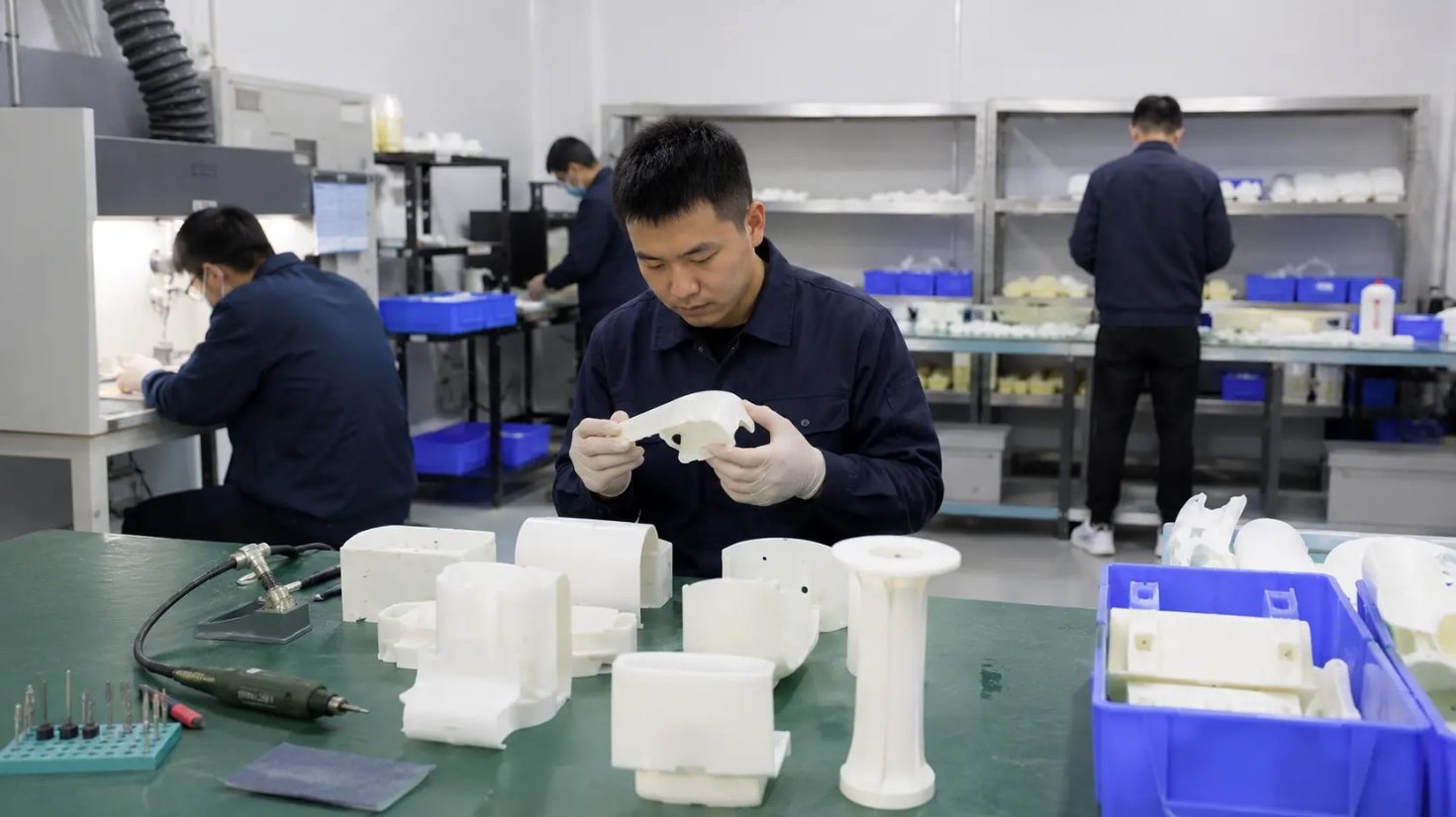
Silicone molds capture master detail faithfully — grain, characters, texture and brushing all replicate as-is; dimensional replication holds ±0.15–0.2 mm (depending on master accuracy and wall thickness). Cast parts flow straight into grinding, polishing, painting, screen printing, laser marking and plating, delivering a production-grade exterior — no one can tell it was a cast part.
Replication±0.15–0.2 mm, or ±0.2% (master accuracy & wall dependent)
DetailGrain, texture, characters, fine texture replicated as-is
PostGrind/polish, paint (matte/gloss/rubber), screen print, laser, plating, hydrographics
ConsistencyPart-to-part consistent within a mold; batch color & dimension controlled
Best for · appearance review, consumer-electronics housings, finished-grade samples needing paint/print
SMART HARDWARE NICHE
100 units for a crowdfunding first run, shells that look production-grade.
Smart-hardware teams in the crowdfunding, trial and channeling phase need complete shells that go straight to users — volumes too low to amortize a steel mold, yet look, feel, printed logos and color must match mass production, or first-run reputation dies on “prototype vibes”. We make shells and handgrip parts by vacuum casting: PU resin selected to the target production material, grain and texture fully replicated, then painted, screen-printed, laser-marked and plated; shells are dry-fit against the internal PCBA, battery and hardware to snaps and screw bosses, and delivered in matched, paired, numbered sets.
LeadPrototype within days; 20–200 pcs economical volume
FinishPaint, logo silkscreen, laser, plating — production-equivalent
FitSnap & screw-boss dry-fit vs PCBA/battery/hardware
DeliveryMatched, paired, numbered by set
Best for · consumer electronics, crowdfunding first runs, TWS cases, wearable & tool housings