
Resources
Material Selection Guide
A material selection guide organized by process, performance and cost, with a comparison table to help choose materials for prototyping and low-volume production.
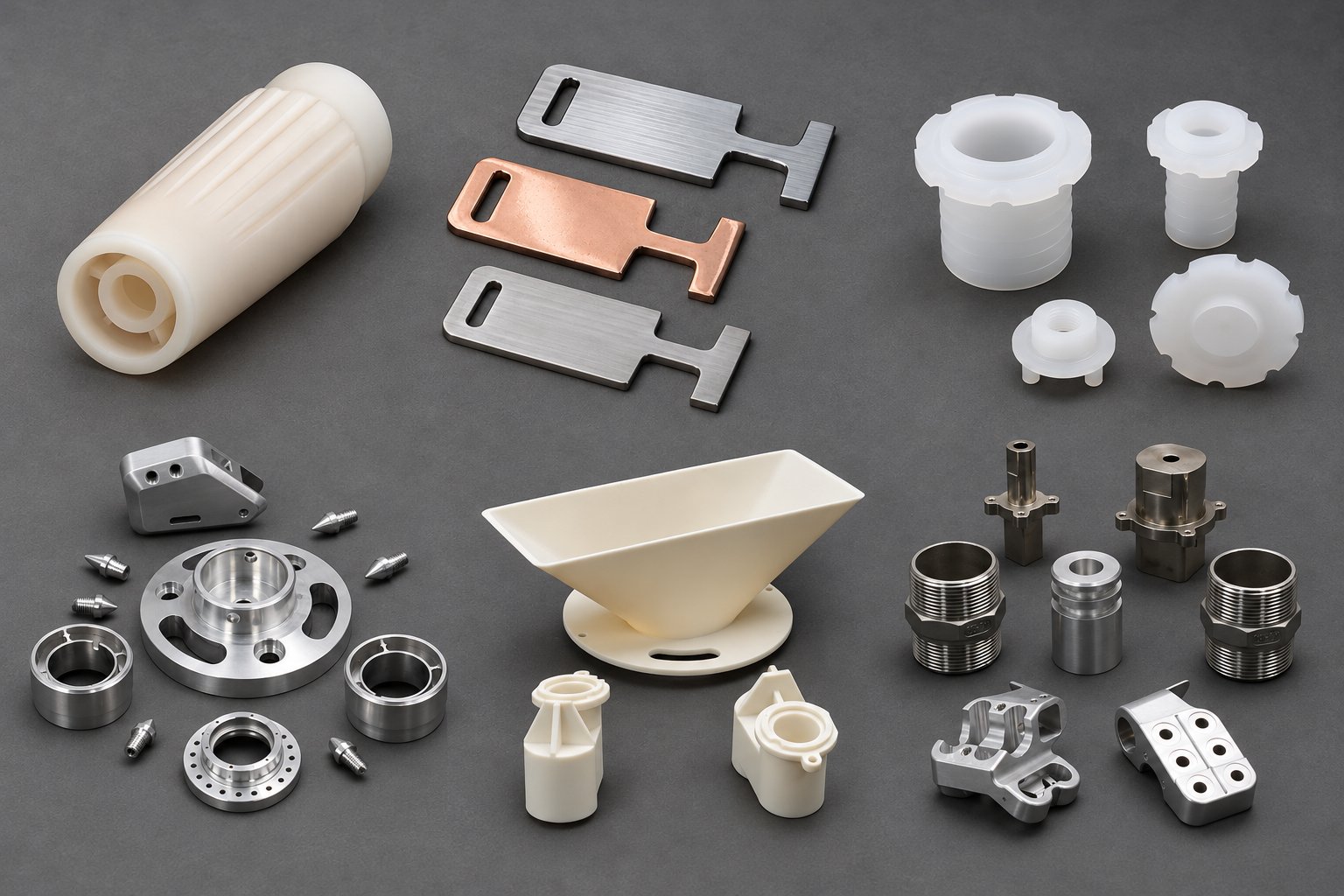
Choose the right material for your prototype or production part.
Material selection affects strength, weight, appearance, manufacturing cost and service life. This guide helps you compare material options for CNC machining, 3D printing, vacuum casting and sheet metal fabrication.
1. Metals for Machined Parts and Sheet Metal Components
| Metal Materials | Typical Applications | Selection Notes |
|---|---|---|
| Aluminum Alloys | Robot brackets, housings, mounting plates and lightweight structural parts. | Specify the alloy and temper. Material selection for machining may differ from selection for bending. |
| Stainless Steel | Equipment panels, brackets and components exposed to moisture. | Choose the grade according to corrosion exposure, forming requirements and surface finish. |
| Carbon Steel | Equipment frames, cabinet panels and general structural components. | Consider protective finishing when corrosion resistance is required. |
| Brass | Turned fittings, inserts and decorative components. | Specify the grade and any electrical, environmental or appearance requirements. |
2. Plastics for CNC Machining
| Plastic Materials | Typical Applications | Selection Notes |
|---|---|---|
| ABS / Acrylonitrile Butadiene Styrene | Electronic housings, equipment covers and functional prototypes. | A cost-effective option with good impact resistance and machinability; confirm heat, UV and chemical-exposure requirements. |
| POM / Acetal | Bushings, spacers and sliding components. | An option for low-friction mechanical parts; confirm fit and operating conditions. |
| PC / Polycarbonate | Protective covers and impact-resistant prototypes. | Specify transparency, impact and chemical-exposure requirements. |
| PMMA / Acrylic | Transparent display parts and cosmetic models. | Often selected for optical appearance; assess impact loads and cracking risks. |
| PA / Nylon | Wear components, guides and functional prototypes. | Moisture absorption can affect dimensions; discuss the intended environment. |
| PEEK | Components requiring elevated-temperature or chemical performance. | Confirm the exact grade and service conditions; consider the higher material cost. |
3. Materials for 3D Printing and Vacuum Casting
| Process | Material Options | What to Specify |
|---|---|---|
| Resin 3D Printing | General-purpose, clear or heat-resistant photopolymer resins, subject to availability. | Appearance, functional loads, temperature exposure and post-processing requirements. |
| Metal 3D Printing | Aluminum, stainless steel or titanium alloys, subject to process and grade confirmation. | Alloy, critical dimensions, load requirements and any secondary machining. |
| Vacuum Casting | Polyurethane casting resins selected for rigid, flexible or transparent parts. | Target stiffness, hardness, color, transparency and intended use. |
Material names such as “ABS-like” describe a target property profile, not an identical material composition. Confirm the specific material datasheet before approval.
Tell Us What Your Part Needs to Do
we can review suitable material and process options.
- Application and operating environment
- Mechanical loads and assembly requirements
- Operating temperature and chemical exposure
- Color, transparency and surface finish
- Quantity and target budget
- Required material grade, datasheet or certification